
How to Use an Airless Paint Sprayer: A Complete Guide
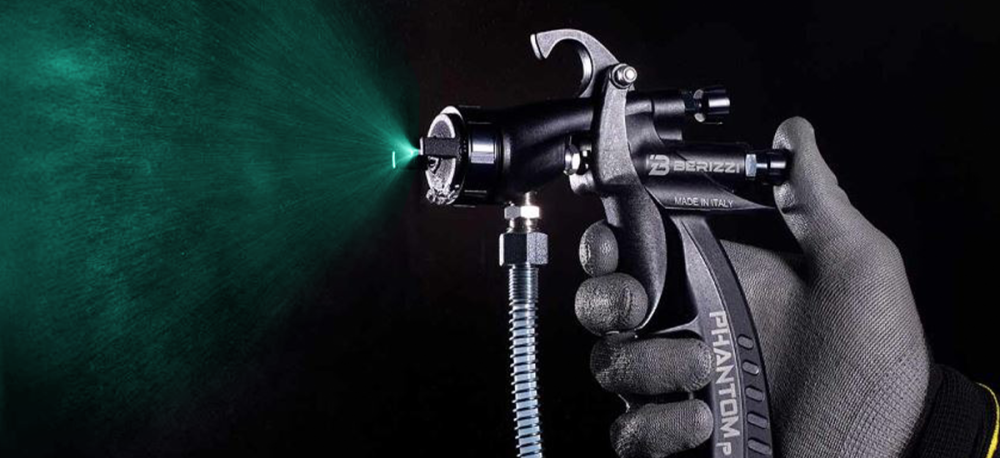
An airless sprayer delivers the speed and consistency coating applicators need to handle high-volume work. Understanding how to use an airless paint sprayer ensures you achieve a flawless finish on any surface while maximizing efficiency. This guide walks you through the complete process from setup to cleanup so you can deliver professional results reliably.
What Is an Airless Paint Sprayer and How Does It Work?
An airless sprayer is a high-pressure coating system that typically includes a pump, hose, spray gun and spray tip. You can also find airless pump accessories, such as filters and gun swivels.
The spraying system pulls paint from a container into the pump, pressurizes the paint to thousands of pounds per square inch (psi), and then pushes it through the hose and out of the tip in a fan-shaped pattern.
You can choose manual or automatic airless spraying systems depending on your production needs. Manual options work well for smaller batches, while automatic ones mount the gun on a mechanical arm and are convenient when coating larger batches.
Airless sprayers handle high-volume applications, like:
- Cabinet finishing
- Furniture manufacturing
- Door production
- Architectural millwork
- Automotive coating
- Industrial equipment
Air Spray Painting vs. Airless Sprayer
Air spray painting systems use compressed air to atomize paint, while airless sprayers rely solely on high pressure. Air spray creates exceptionally smooth finishes ideal for fine detail work. However, it produces significant overspray.
Airless systems deliver faster coverage and better transfer efficiency, and can handle thicker coatings more effectively. In production environments, like cabinet finishing and door manufacturing, airless sprayers deliver superior speed and material savings without sacrificing quality.
How to Use an Airless Paint Sprayer
Here is how to use an airless gun spray system:
- Prepare your space and surface.
- Protect yourself by wearing personal protective equipment (PPE).
- Set up your sprayer by attaching the accessories, priming the pump and depressurizing.
- Spray in overlapping patterns while moving and holding the gun at a 90-degree angle.
- Clean your sprayer correctly to prevent clogs and extend your equipment’s lifespan.
Let’s look at these steps in more detail.
Prepare Your Space and Surface
Remove dust, dirt and debris from all surfaces before you begin, as these contaminants can get into your coatings and ruin the final finish. If you notice any cracks or chips while cleaning, make sure you sand them smooth.
Open doors and windows and use fans to maintain ventilation per regulations. Ventilation also reduces dust settling on wet surfaces and helps coatings dry properly. Cover hardware, edges and adjacent surfaces with drop cloths to shield them from overspray, too.
Protect Yourself
You can protect yourself before using an airless spray gun by:
- Wearing a rated respirator approved by the National Institute for Occupational Safety and Health (NIOSH).
- Putting on goggles, which block overspray from all angles.
- Donning gloves that will not compromise your ability to handle the sprayer.
- Wearing a disposable coverall or spray suit.
- Choosing closed-toe shoes with slip-resistant soles.
Set up Your Sprayer
Follow these steps to prepare your paint spraying system:
- Select the right tip: Tips are marked with three digits. The first digit indicates spray pattern width in inches when held 12 inches from the surface. The last two digits show the opening size in thousandths of an inch. Match your tip to your coating viscosity. Thin coatings need smaller openings and vice versa.
- Install filters: These pump filters keep contaminants out of your coatings and prevent clogs. Coarse-mesh filters work for thick materials, while fine-mesh filters suit thin materials.
- Add gun swivels: These accessories allow the hoses to rotate freely under pressure, preventing twisting that pulls on your wrist. Choose ones rated for your system's pressure. Most professional setups require swivels rated for at least 3,000 psi.
- Connect all components: Attach the high-pressure hose to the pump and the gun. Then, install your selected tip and check all your connections for leaks before proceeding.
- Prime the pump: Turn on the pump and trigger the gun into a bucket until the paint flows steadily, with no air bubbles. Next, test-spray on scrap material, adjusting the pressure until you achieve an even pattern.
- Depressurize the system: Turn off the pump and discharge the gun until the pressure is completely released. This minimizes the risk of high-pressure injection injuries by preventing material from spraying unexpectedly.
Spray
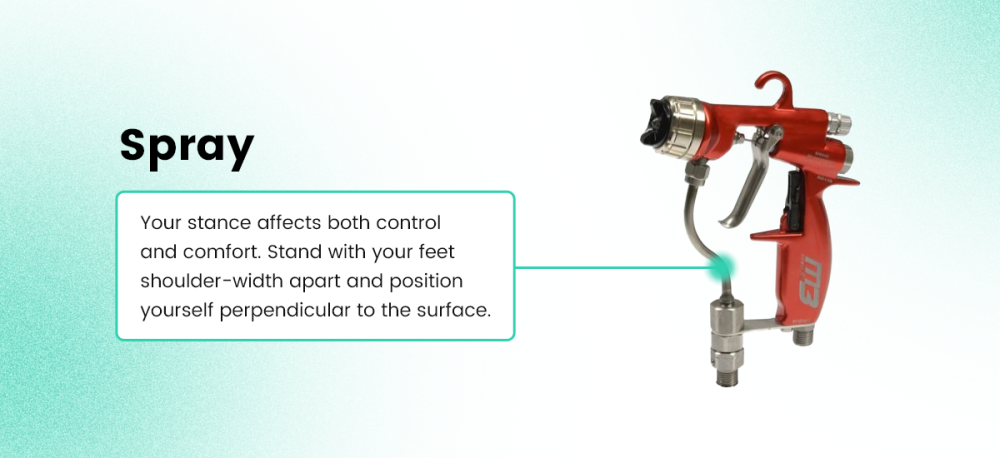
Your stance affects both control and comfort. Stand with your feet shoulder-width apart and position yourself perpendicular to the surface. Hold the gun firmly and position it so that the tip is 10-12 inches from the surface.
Press the trigger after you start moving and release it before you stop. This prevents heavy buildup at the beginning and end of each pass. While spraying, maintain a 90-degree angle to avoid buildups on one side.
Spraying in overlapping patterns also ensures complete coverage. For vertical surfaces, work from top to bottom, and for horizontal surfaces, work from side to side. Apply multiple thin coats to reduce the risk of runs. Also, allow adequate drying time between applications.
Clean Up
After turning off the sprayer, trigger the gun into a bucket until no pressure remains. Remove the tip next and soak it in an appropriate solvent.
Fill a clean container with solvent and run it through the system. When clear liquid comes out of the tip, you will know there is no longer any coating on any components. Clean the exterior with a solvent-dampened cloth and store the system in a location with stable temperatures.
Troubleshooting Tips
If you're experiencing issues with your airless paint sprayer, try these troubleshooting tips to get back on track:
- Overspray: Lower the pressure in small increments until you achieve good coverage without creating a large mist cloud. Overspray also increases when you hold the gun too far from the surface. Maintain a 10-12-inch distance for best results.
- Streaks: Clean the spray tip thoroughly, as partial clogs can cause distorted patterns. Check that you are holding the gun perpendicular to the surface and moving at constant speed. Increase your overlap between passes, too.
- Pulsating flows: Air trapped in the system causes uneven flow. Turn on the pump and trigger the gun into a bucket until the paint flows steadily. Also, make sure your material container has enough coating.
- Leaks: Inspect all fittings and tighten any loose connections at the hose, pump and gun. If your seals are worn, replace them immediately to prevent small leaks from worsening under high pressure.
Shop Airless Sprayers and Achieve Flawless Finishes
KM Coating Inc. carries everything you need to keep your airless sprayer running at peak performance. From complete systems to components like high-pressure hoses, spray tips, pumps, guns and swivels, we stock professional-grade equipment from Berizzi, Graco and Sames Kremlin.
We can customize hose lengths and fitting configurations to your exact specifications and offer competitive pricing that helps you stay profitable. Our team understands coating operations and can match you with the right components for your applications.
Explore our extensive selection online or contact us for expert guidance.
Post comments
Leave A Reply
Your email address will not be published.