
Guide to the Best Equipment for Large-Scale Painting Projects
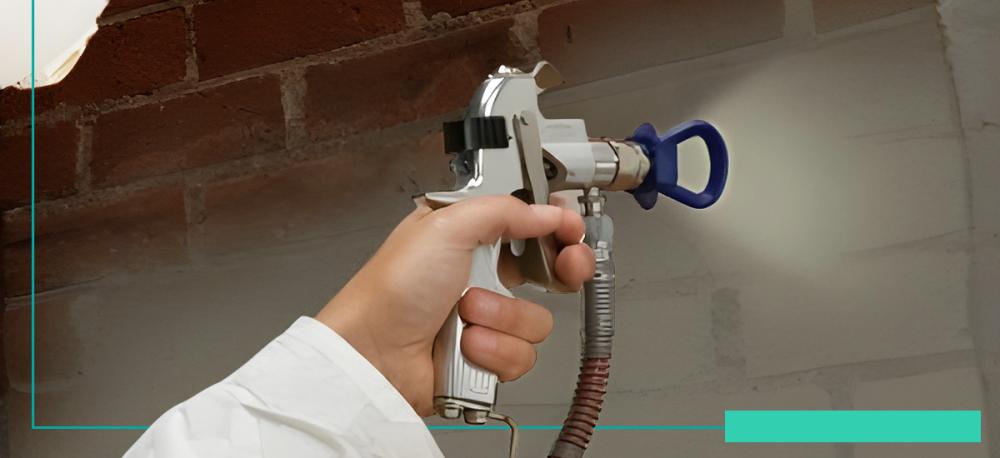
When deadlines tighten and volume increases, your workflow's efficiency depends on your tools. Choosing the best equipment for large-scale painting projects is about investing in a system that delivers superior transfer efficiency, reduces material waste and ensures a flawless finish every time.
Whether you are outfitting a new finishing line for kitchen cabinets or managing site work for a commercial complex, downtime caused by equipment failure is not an option. Learn how to select the right commercial spray equipment to turn a logistical headache into a profitable venture.
What Is Considered a "Large-Scale" Project?
Before browsing catalogs, you should define the scope of your operation. For a woodworking company, this might mean finishing 500 cabinet doors in a single shift. For industrial painters, it could involve coating thousands of square feet of structural steel. These scenarios demand equipment engineered for continuous duty cycles without overheating or losing pressure.
While a high-end residential foyer might be physically large, it requires the finesse of a residential setup. Commercial large-scale projects, however, prioritize speed and consistency. Commercial equipment is built with larger motors, more durable packings and higher flow rates to support longer hose lengths and heavier coatings.
Paint Application Systems
While brushes and rollers have their place, large-scale efficiency dictates the use of advanced spray systems. Below are some common examples of large-scale painting equipment that you might use for your projects.
Airless Sprayers
For raw speed and heavy coverage, airless sprayers remain the industry standard. By using high pressure — up to 3,000 PSI or more — to atomize fluid without compressed air, these units can quickly push significant volumes of paint. They are ideal for exterior siding, large interior walls and structural steel where a "fine finish" is secondary to protective coverage.
Airless systems support long hose runs, allowing your crew to move freely around a large jobsite without moving the pump unit.
High Volume Low Pressure (HVLP) Systems
For kitchen cabinet companies and fine furniture manufacturers, air-assisted airless technology is often the superior choice over standard airless or traditional high-volume spray systems.
An air-assisted airless system combines the speed of an airless pump with the finish quality of an air spray gun. It uses a lower fluid pressure to push material to the gun, where a small amount of compressed air helps atomize the spray pattern. This results in:
- Softer spray patterns: Industrial paint sprayers offer fewer "tails" and a smoother laydown.
- High transfer efficiency: These machines create significantly less overspray than standard airless, saving money on expensive lacquers and varnishes.
Commercial Roller Systems and Accessories
Back rolling is often necessary for adhesion and texture consistency on drywall. Pressure rollers, which feed paint directly from the pump to the roller head, eliminate the need for dipping and can double the speed of manual rolling on large flat surfaces.
Specialty Application Tools for Difficult Surfaces
Not every surface is flat and accessible. For intricate woodworking or hard-to-reach industrial piping, investing in specialty tools is mandatory. This includes electrostatic systems for metalwork, which wrap paint around the object, and extended reach tools like 6-foot gun extensions that allow operators to spray ceilings without scaffolding.
Surface Preparation Equipment
A coating is only as good as the surface beneath it. On large-scale projects, you can reduce labor costs and time by choosing high-quality sanding materials.
Commercial Sanders and Dustless Systems
Modern electric sanders with active dust extraction are essential for large-scale indoor work. They protect the substrate from contamination and keep the jobsite clean, reducing cleanup time. For cabinet makers, random orbital sanders connected to HEPA vacuums ensure that the grain is prepped perfectly without leaving swirl marks that will show through the finish.
Large-Scale Cleaning Equipment
Before refinishing factory floors or exterior masonry, your team must clean surfaces to remove dirt and encourage adhesion. Industrial-grade pressure washers help reduce the workload while prepping the surface. For interior woodwork, tack cloth wipes and industrial solvent sprayers ensure dust-free surfaces before applying the primer coat.
Professional Patching and Repair Tools
Efficiency slows down when defects are found. Professional crews use hopper guns for texture matching and rapid-set compound mixers to handle large patch jobs quickly. Automated taping tools are also essential for drywall finishing at scale.
Access and Safety Equipment for Large Projects
Proper equipment use is vital to maintaining a compliant jobsite, especially when working on larger buildings and spaces. Reaching the work area efficiently is just as important as the painting itself. The Occupational Safety and Health Administration (OSHA) outlines specific requirements for scaffolding in Standard Number 1926.451. For projects exceeding 10 feet in height, ladders become inefficient and risky. Scissor lifts are the gold standard for large interiors and flat concrete exteriors, offering a stable platform for workers and their equipment. For uneven terrain or extreme heights, articulating boom lifts are necessary.
Additionally, large-scale spraying requires proper respiratory protection, such as P100 filters or fresh air systems, and ventilation fans to manage fumes in enclosed spaces. Following these regulations will protect painters and companies from violations.
Organization and Efficiency Boosters
The right organizational tools are what separate a good crew from a great one. Investing in efficiency boosters directly enhances project speed and reduces waste overall.
Paint Management Systems for Large Volumes
Using 5-gallon or 55-gallon drum suction kits enables continuous spraying without the need for frequent stops to refill. For two-component materials, such as epoxies or urethanes, plural-component proportioners automatically mix the material on demand, saving time and helping prevent waste.
Time-Saving Accessories and Innovations
These smaller accessories can extend your equipment's lifetime and improve productivity on the job:
- Reversible spray tips: Clear clogs in seconds by twisting the reversible tip.
- Swivel hoses: Our gun swivel accessories prevent kinks and reduce wrist fatigue for the operator.
- In-line filters: Choose the right filter that will catch debris and extend your equipment's lifetime.
Buying Guide: How to Select the Right Equipment
Making the right purchase involves balancing immediate needs with long-term goals. Here are a few steps to choosing the right contractor spray equipment.
1. Consider Your Budget and Equipment ROI
High-quality equipment has a higher up-front cost but a lower cost per gallon sprayed. For example, if a $3,000 pump saves you 15% in material waste due to better transfer efficiency, the return on investment (ROI) is realized within a few large jobs.
When scaling up, the initial price tag is less important than the total cost of ownership. Consider the potential ROI based on:
- Transfer efficiency: How much material actually lands on the substrate versus floating away as overspray?
- Downtime: Is the pump serviceable on-site, or will a breakdown halt production for days?
- Versatility: Can the unit handle both stains and high-solid lacquers?
2. Outline Maintenance Requirements and Longevity
Durability is key. Look for pumps with accessible fluid sections that can be repacked easily. Equipment with fluid sections made from stainless steel or hardened alloys will resist the abrasive nature of modern coatings better than plastic or aluminum components.
3. Consider Best Practices Before Purchasing
To get the most out of your investment, consistency is key. Establish a strict cleaning protocol to prevent dried paint from accumulating on your materials.
Keep a "save-a-day" kit on-site, containing spare tips, gun filters and packing seals. Be sure to match your spray tip to the material you're spraying. Using a worn tip blows out the pattern, wasting paint and requiring more back rolling.
Our Equipment Recommendations for Specific Project Types
KM Coating Inc. has years of experience choosing equipment for commercial and large-scale painting operations. Below are our top recommendations for painting equipment, based on your scenario:
- Commercial building exteriors: We recommend gas-powered hydraulic airless sprayers. These units operate independently of site electricity and provide the relentless power needed to push heavy acrylics and elastomeric coatings up vertical walls.
- Large interior spaces: Our electric airless sprayers are quiet, emission-free and consistent. Pair with a large electric roller attachment for hallways and office spaces.
- Industrial facilities: Pneumatic or air-driven pumps are the workhorses in hazardous environments where sparks are a concern or where compressed air is readily available. They offer extreme durability and pressure capabilities.
- Multi-unit residential projects: Portable airless units are easy to wheel from unit to unit and powerful enough to support two guns simultaneously, doubling crew productivity.
Partner With KM Coating Inc. for Your Large-Scale Project Needs
Scaling your operations requires more than just a powerful pump — it demands a complete system of durable components working in harmony. At KM Coating Inc., we provide a comprehensive range of professional-grade equipment, from industrial airless sprayers and air-assisted pumps to high-pressure hoses, guns and precision tips that ensure a flawless finish on every job. We are your partner in productivity, equipping you for any large-scale challenge.
Explore our commercial painting equipment or schedule a consultation to determine the right equipment for your project and budget.
Post comments
Leave A Reply
Your email address will not be published.